Table Of Content
Your documentation will be used to share the product's value with stakeholders and enable the finished product to be manufactured to the required standards. You may need to participate in meetings and presentations to share the results of the engineering design process with managers, engineers, board directors, shareholders, and even potential customers. The final stage of the engineering design process is to share your results. You can create reports, presentations, and displays as needed to share the functionality of your product and why it's the best solution to the problem at hand. Our purpose at Starweaver is to empower individuals and organizations with practical knowledge and skills for a rapidly transforming world. By collaborating with an extensive, global network of proven expert educators, we deliver engaging, information-rich learning experiences that work to revolutionize lives and careers.
Mechanics of Materials I: Fundamentals of Stress & Strain and Axial Loading
Integrated Engineering - Siemens
Integrated Engineering.
Posted: Thu, 01 Feb 2024 04:16:04 GMT [source]
After their tests, they develop ideas to control the spread of germs within the classroom. The engineering design process is a methodical approach that engineers use to create functional products and processes. It serves as a blueprint for problem-solving and innovating in various disciplines. The engineering product design process follows specific steps to ensure every possibility is explored.
Fundamental Skills in Engineering Design
Since many factors go into the design of a shin guard, students follow the engineering design process to create a prototype. In this hands-on activity, student groups design, build, test and improve devices to pump water as if they were engineers helping a rural village meet their drinking water supply. Students keep track of their materials costs, and calculate power and cost efficiencies of the prototype pumps. Students learn how biomedical engineers work with engineers and other professionals to develop dependable medical devices. Student teams brainstorm, sketch, design and create prototypes of suction pump protection devices to keep fluid from backing up and ruining the pump motors.
Design Requirements
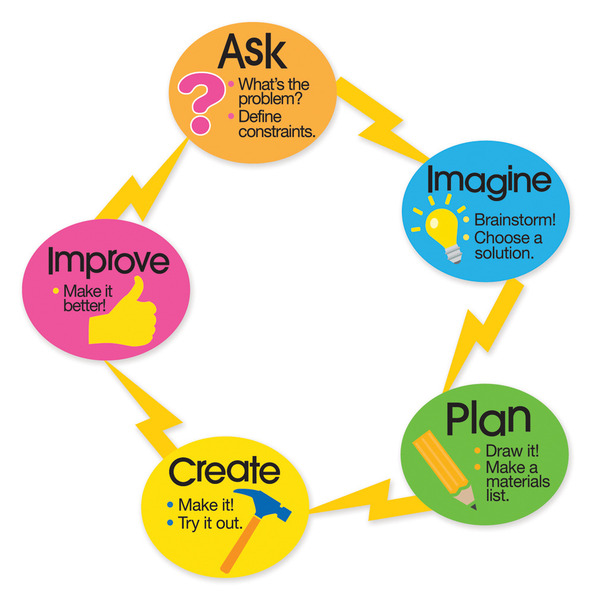
This structured approach ensures efficiency and effectiveness in the development of products or systems. Once testing has been completed, the design can be revised and improved. This step can be repeated several times as more prototypes are created and evaluated. Having listed potential solutions and determined the needs of the project alongside your research, the next step is to establish any factors that may constrain your work. This can be done by revisiting the requirements and bringing together your findings and ideas from previous steps. While the design process is iterative it follows a predetermined set of steps, some of these may need to be repeated before moving to the next one.
They do this by designing, building and testing their own hand "gripper" prototypes that are able to grasp and lift a 200 ml cup of sand. In this two-part activity, students design and build Rube Goldberg machines. This open-ended challenge employs the engineering design process and may have a pre-determined purpose, such as rolling a marble into a cup from a distance, or let students decide the purposes. Student teams are challenged to design models of Egyptian funerary barges for the purpose of transporting mummies through the underworld to the afterlife. Students design and build prototypes using materials and tools like the ancient Egyptians had at their disposal. Students learn more about assistive devices, specifically biomedical engineering applied to computer engineering concepts, with an engineering challenge to create an automatic floor cleaner computer program.
Life as an Early Career Engineer - Features - The Chemical Engineer
Life as an Early Career Engineer - Features.
Posted: Thu, 26 Oct 2023 07:00:00 GMT [source]
Semiconductor process engineers face the unique challenge of transforming raw materials into high-tech devices. Common semiconductor devices include Integrated Circuits (ICs), Light-Emitting Diodes (LEDs), solar cells, and solid-state lasers. To produce these and other semiconductor devices, semiconductor process engineers rely heavily on interconnected physical and chemical processes. The engineering design process can be applied to a broad range of products. It is used to guide product development teams through the process of developing innovative ideas and nurturing those ideas to create products that solve problems for their target audience. Module 2 focuses on navigating the design process, covering detailed exploration of design process steps, brainstorming and creative problem-solving techniques, and introduction to design constraints and considerations.

Student pairs design, build, and test model vehicles capable of rolling down a ramp and then coasting freely as far as possible. The challenge is to make the vehicles entirely out of dry pasta using only adhesive (such as hot glue) to hold the components together. They synthesize this data to understand the project's impact, identify areas for improvement, and inform future designs.
Using those skills, they create their own applications and use them to collect data from an Android device accelerometer and store that data to databases. Students take on the challenge of assembling a light sensor circuit in order to observe its readings using the Arduino Serial Monitor. They also create their own unique visualization through software called Processing. They learn how to use calibration and smoothing along the way to capture a better...
They use their catapults to participate in a game in which they launch Ping-Pong balls to attempt to hit various targets. As the first engineering design challenge of the unit, students are introduced to the logic for solving a maze. Student groups apply logic to program LEGO® MINDSTORMS® EV3 robots to navigate through a maze, first with no sensors, and then with sensors. The process allows for applied science, mathematics and engineering sciences to be used to achieve a high level of optimisation to meet the requirements of an objective.
They create specialized materials with features such as waterproofing and stain resistance. The challenge starts with student teams identifying an intended user and developing scenarios for using their developed ... Student teams create laparoscopic surgical robots designed to reduce the invasiveness of diagnosing endometriosis and investigate how the disease forms and spreads. Using a synthetic abdominal cavity simulator, students test and iterate their remotely controlled, camera-toting prototype devices, whi... Student teams design, construct, test and improve small working models of water treatment plant processes to filter out contaminants and reclaim resources from simulated wastewater.
The steps include problem solving processes such as, for example, determining your objectives and constraints, prototyping, testing and evaluation. While the process follows a defined pattern, it is iterative to yield the best results. Some steps may be completed out of order or repeated to eliminate issues or examine areas of concern. The engineering design process is commonly used on any project that requires designing, building, and testing a product. When product designers use the engineering design process, they apply engineering experience, industry knowledge, and technology to design and build solutions for specific problems. The engineering design process, also known as the engineering method, is a common series of steps that engineers use in creating functional products and processes.
Each part of the process reveals information about the problem and possible solutions. In some cases, a feasibility study is carried out after which schedules, resource plans and estimates for the next phase are developed. The feasibility study is an evaluation and analysis of the potential of a proposed project to support the process of decision making. It outlines and analyses alternatives or methods of achieving the desired outcome. The feasibility study helps to narrow the scope of the project to identify the best scenario.A feasibility report is generated following which Post Feasibility Review is performed.
Committed to our belief that people are the most valuable asset, we focus on building capabilities to navigate ever evolving challenges in technology, business, and design. Teaching the EDP is like giving students a superpower for tackling problems and thinking critically. It’s all about getting their hands dirty with projects, diving into STEM activities, and taking on real-world engineering challenges—think building bridges or planning a rocket launch (NASA, we’re coming for you!). Students learn how to connect Arduino microcontroller boards to computers and write basic code to blink LEDs. Provided steps guide students through the connection process, troubleshooting common pitfalls and writing their first Arduino programs. Students learn about human proteins, how their shapes are related to their functions and how DNA protein mutations result in diseases.




No comments:
Post a Comment